When Jennifer Lawrence’s October 2026 photoshoot for The Cut hit the internet, it sparked online discourse that had nothing to do with her new haircare line. It was all about her eyes. Specifically, whether she’d had upper blepharoplasty and how it might have affected the heavy, hooded lids that many considered one of her defining features.
Plastic surgeons weighed in. Reddit threads multiplied. And the word “blepharoplasty” trended. The debate, unconfirmed as it remains, touched a nerve because it articulated something many people worry about before eyelid surgery: Will I still look like myself afterward?
It’s a fair question. And according to the International Society of Aesthetic Plastic Surgery (ISAPS), it’s one that more people are asking than ever. In 2024, blepharoplasty surpassed breast augmentation and liposuction to become the most-performed cosmetic surgical procedure in the world, with more than 2.1 million procedures performed globally. By 2025, that number had grown to more than 2.4 million procedures. In the United States, the American Society of Plastic Surgeons (ASPS) ranks it as the most common facial surgical procedure, and in 2025, volume climbed nearly 19% year over year.
So what actually happens during eyelid surgery? The procedure is more straightforward than most people expect, and understanding the process from start to finish can take a lot of the anxiety out of it. Here’s your step-by-step guide, from early research through final results.
The Prequel: Preparing for Eyelid Surgery
Step 1: The Research Phase
Most patients spend weeks or months researching eyelid surgery before they ever call a surgeon’s office. That’s normal. It’s also smart.
During this phase, you’re trying to answer a few key questions. Am I a good candidate? What kind of results are realistic for my anatomy? And who should I trust to do this?
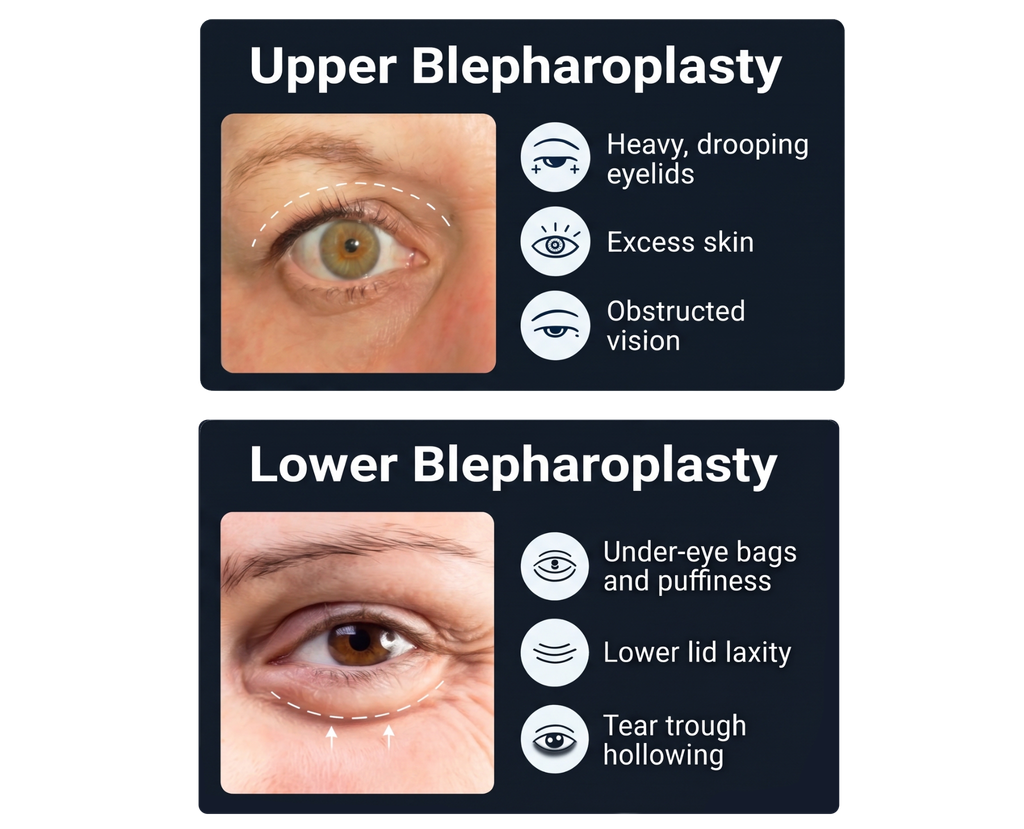
Start with the basics. Blepharoplasty can address the upper eyelids, lower eyelids or both. Upper blepharoplasty removes excess skin that creates a hooded or heavy appearance over the eye. For some patients, that skin drapes far enough to interfere with peripheral vision, which means the procedure may qualify as medically necessary and be covered by insurance. Lower blepharoplasty targets puffiness, under-eye bags and loose skin beneath the lash line.
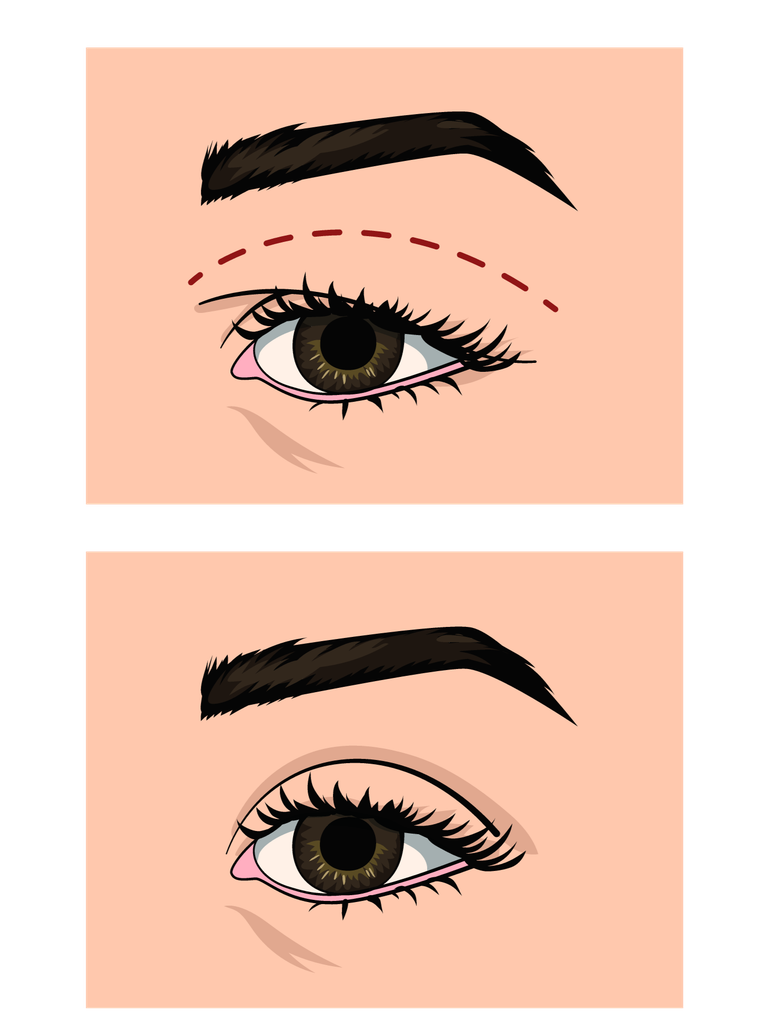
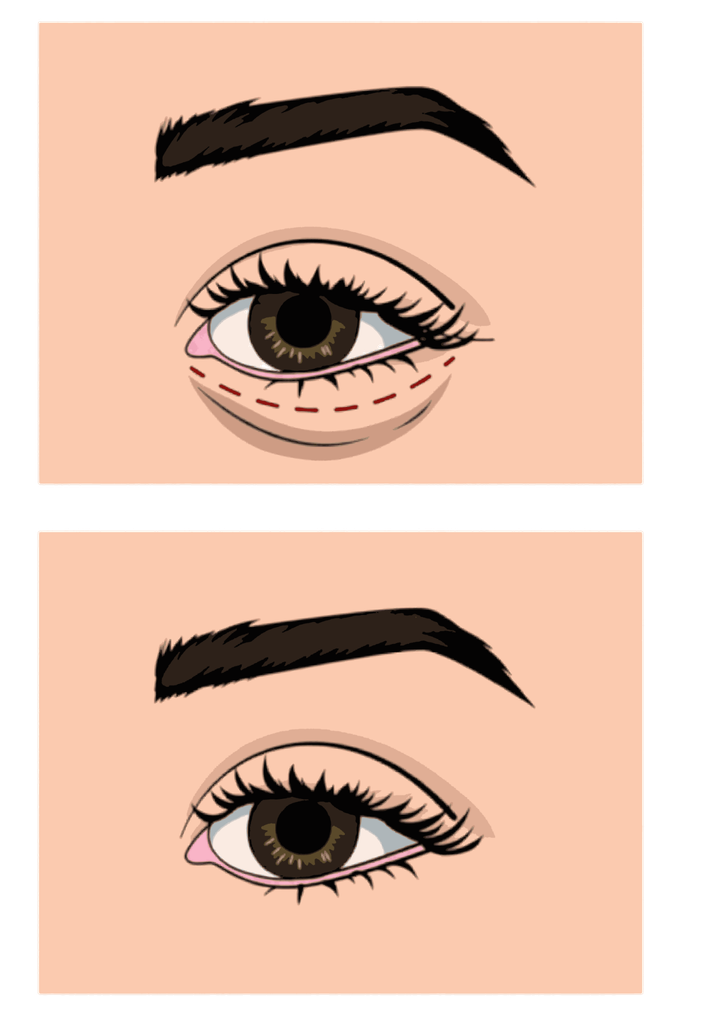
In either procedure, the surgeon must consider how removing or repositioning tissue will affect the shape, function and appearance of the eyelids. This is where specialized training becomes particularly valuable. Dr. Carlos Ayala, a double board-certified otolaryngologist and facial plastic surgeon in McAllen, TX, trained at UCLA and Harvard before completing a facial plastic surgery fellowship in Beverly Hills. He draws on that training to achieve results that refresh the eyes while preserving the features that make them distinctive.
Step 2: Your Consultation
You may already know what bothers you about your eyelids. But have you considered what you like about them? Both are worth discussing with your surgeon.
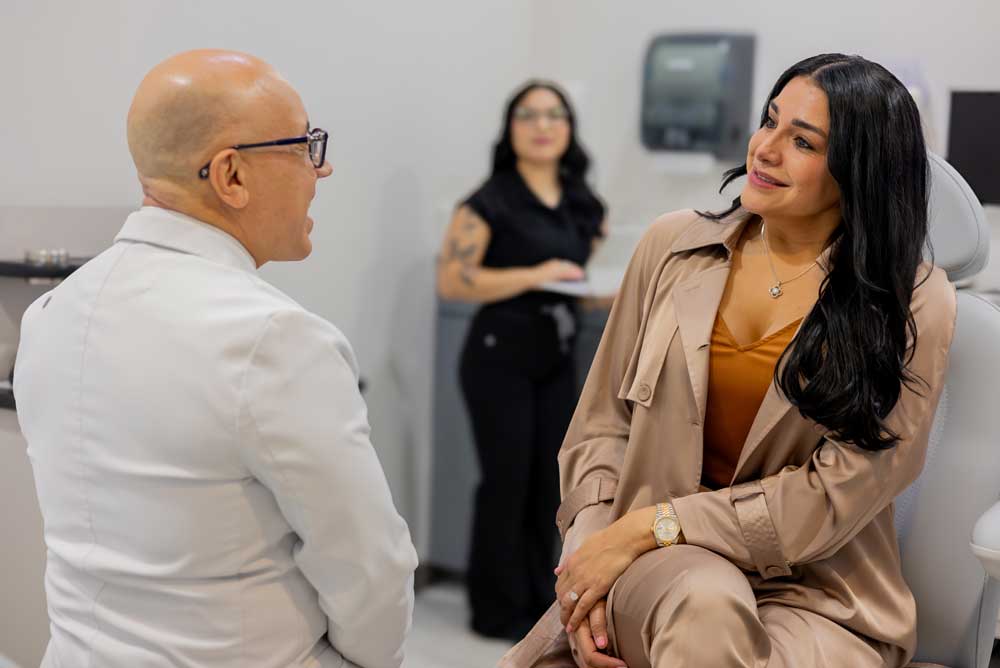
Dr. Ayala makes this a priority in his conversations with patients. “I simplify the beauty in all of us,” he says. “There’s natural beauty in just being you. I don’t want to take that away. I just enhance or change things you don’t like.”
During your appointment, your surgeon should:
- Evaluate skin elasticity, muscle tone and fat distribution around your eyes
- Assess your brow position, since a drooping brow can mimic excess upper eyelid skin
- Review your medical history, medications and any history of dry eyes
- Explain what can realistically be achieved with your anatomy
By the end of your consultation, you should have a good idea of how your surgeon intends to approach your particular anatomy. Don’t hesitate to ask why they’re recommending a certain technique, how it might affect your eye shape or whether there are different ways to achieve your desired result. You should leave the appointment feeling confident in both the surgical plan and the reasoning behind it.
Step 3: Pre-Op Preparation
Once your surgery is scheduled, your surgeon will provide instructions to help you prepare for the procedure and the first few days of recovery. This often includes discontinuing blood-thinning medications, stopping smoking and arranging for someone to drive you home.
Here’s a checklist of things to take care of before surgery.
Your Eyelid Surgery Preparation Checklist
Review medications and supplements with your surgical team
Follow your surgeon’s instructions regarding nicotine cessation
Arrange transportation home on the day of surgery
Fill any prescriptions needed for recovery
Stock up on cold compresses and lubricating eye drops
Prepare a comfortable recovery area with extra pillows for head elevation
Set aside about a week away from work, video calls and social commitments
Review your preoperative fasting and day-of-surgery instructions
Note: Never discontinue prescription medications without consulting your prescribing physician and surgical team.
The Surgery: What Happens During Blepharoplasty
One thing that surprises many patients is that general anesthesia isn’t always necessary for eyelid surgery. The procedure can often be performed under local anesthesia with light sedation, reducing anesthesia-related costs and recovery time.
At Ayala ENT & Facial Plastic Surgery, Dr. Ayala operates in an accredited surgical facility and offers both local and general anesthesia, taking into account the extent of your procedure, medical history and personal preferences.
The entire procedure typically takes about one to two hours to complete.
Step 4: Anesthesia
For awake blepharoplasty, your surgeon will use a local anesthetic to numb the area around your eyes. You’ll be alert but shouldn’t feel any pain. Some patients describe a mild pressure or tugging sensation, but most are surprised by how comfortable the experience is.
If your procedure is more complex (such as a combined upper and lower blepharoplasty) or being performed alongside another facial surgery, general anesthesia may be recommended instead. Your surgeon will discuss the best option based on your specific surgical plan.
Step 5: Incisions
For upper blepharoplasty, the incision is made along the natural crease of the upper eyelid. This is intentional. Once healed, the scar sits within the fold of the eyelid and is virtually invisible when your eyes are open.
Your surgeon will have marked the precise incision lines before the procedure begins, often while you’re sitting upright so gravity shows the natural drape of the skin. These markings are carefully measured. Removing too much skin is what leads to the “overdone” look people worry about. Removing too little leaves the patient feeling like nothing changed.
For lower blepharoplasty, the incision is typically made just below the lower lash line, or in some cases, through the inside of the eyelid (a transconjunctival approach), which leaves no visible external scar.
Step 6: Skin, Muscle & Fat Repositioning
Through the incision, the surgeon removes or repositions excess skin, muscle and fat. The specific approach depends on your anatomy and the results you want to achieve.
In many upper blepharoplasties, a thin strip of skin and sometimes a small amount of underlying orbicularis muscle is excised. If fat pads are contributing to puffiness (common in the inner corner of the upper lid), those may be trimmed or repositioned as well.
Modern techniques tend to favor fat preservation and redistribution over aggressive removal. Once routinely removed during blepharoplasty, fat is now often preserved or repositioned to soften hollows and create smoother contours beneath the eyes.
Step 7: Closing the Incisions
Once the necessary adjustments are complete, your surgeon closes the incisions using fine sutures, skin adhesive or surgical strips. Sutures placed during upper eyelid surgery are generally removed within five to seven days. The goal is to create a fine scar that blends into the natural eyelid crease as it matures.
Unlike some other cosmetic procedures, eyelid surgery generally doesn’t require bulky bandages, so you’ll be able to open your eyes afterward, although swelling and lubricating ointment may temporarily blur your vision.
The Sequel: Eyelid Surgery Recovery & Results
Step 8: The First Week of Recovery
Discomfort is most noticeable during the first 48 hours. Your eyelids will be swollen and may feel tight, heavy or bruised. Cold compresses are your best friend during this period (use them for 10 to 15 minutes at a time, with breaks in between). Some patients experience mild discomfort, light sensitivity and watery or dry eyes.
Most patients manage any soreness with over-the-counter pain relievers. Your surgeon may prescribe antibiotic ointment to apply to the incision sites.
Expect the bruising and swelling to peak around day two or three and then gradually improve. By day five to seven, your sutures come out. Many patients feel comfortable going out in public with sunglasses by the end of the first week.
During this initial phase, avoid bending over, heavy lifting and anything that raises your blood pressure. Sleep with your head elevated on a couple of pillows. Skip contact lenses, eye makeup and screens for at least the first few days.
Step 9: Long-Term Recovery
By two to three weeks, most of the visible bruising has faded and swelling has reduced considerably. This is when patients start to notice the difference in the mirror and usually feel good about what they see.
That said, your final results aren’t visible yet. Subtle swelling can persist for several months, and the incision lines will continue to mature and fade over the course of six to 12 months. The skin around the eyes is thin and delicate, so it heals gradually.
Most activity restrictions are lifted within two to three weeks, although your surgeon will let you know when it’s safe to return to more strenuous exercise. Be diligent about sun protection over the coming months, as UV exposure from the harsh Texas sun can darken healing scars, causing permanent discoloration.
Step 10: Your Results
It generally takes three to six months for full results to develop. By this point, most residual swelling has disappeared, and the incision lines have become much less noticeable.
The longevity of eyelid surgery varies with age, genetics, skin quality and lifestyle. Upper blepharoplasty can provide results that last seven to 10 years or more, while lower eyelid surgery may produce improvements that last decades.
Beyond the physical changes, patients often appreciate looking as well-rested as they feel. You may find that your eyes appear more open in photographs, that applying eye makeup is easier or that you no longer receive unsolicited comments about looking tired.
Will Blepharoplasty Change the Shape of My Eyes?
Blepharoplasty can change how much of your upper eyelid is visible and the contours surrounding your eyes. How pronounced those changes are depends on your existing anatomy and the surgical techniques used.
Several decisions made during surgery influence the finished result, including:
- Extent of skin removal: Influences how much of your upper eyelid is exposed and how much natural hooding remains
- Incision placement: Helps preserve the characteristics of your existing eyelid crease
- Fat preservation and redistribution: Helps avoid a hollow appearance
- Brow position: Influences the appearance of the upper eyelids and how much skin should be removed
- Lower eyelid support: Helps maintain the natural position of the lower eyelid
- Preexisting asymmetries: May require slight differences in how each eyelid is treated
For someone with naturally hooded eyes, a successful blepharoplasty may involve retaining some of that heaviness while addressing age-related changes. The degree of correction is highly personal, and as the reaction to the Jennifer Lawrence photoshoot demonstrated, natural variations in facial anatomy can give someone’s appearance much of its beauty and character.
Explore Dr. Ayala’s Eyelid Surgery Before & After Gallery
Book Your Eyelid Surgery Consultation in McAllen, TX
You can love your eyes and still want to change something about them. At Ayala ENT & Facial Plastic Surgery in McAllen, TX, Harvard-trained and double board-certified facial plastic surgeon Dr. Carlos Ayala believes successful eyelid surgery should enhance your appearance without compromising the natural features that make you uniquely you. Every surgical plan begins with an understanding of your anatomy, your concerns and the results you hope to achieve.
Find out what eyelid surgery could accomplish for you. Request a consultation online today.