Facial Plastic Surgery • Rhinoplasty

Rhinoplasty

McAllen, TX • The Nose Expert™

Dr. Carlos Ayala is a Harvard-trained, double board‑certified otolaryngologist and facial plastic surgeon serving patients throughout the Rio Grande Valley and across South Texas — Edinburg, Mission, Brownsville, Corpus Christi and beyond.

Procedure At a Glance

Rhinoplasty

Procedure

Surgical

Anesthesia

General

Surgery Time

2 – 4 Hours

Techniques

Open, Closed, Hybrid

+ Ultrasonic / Structural Preservation

Return to Work

1 – 2 Weeks

Final Results

9 – 12 Months

Cost

$9,000 – $13,000

Customized to anatomy and goals

Financing

Prosper®, CareCredit®,
In-office Layaway

Rhinoplasty is one of the most personal and rewarding decisions a person can make. Whether the goal is a subtler profile, better breathing, or correcting the results of a previous surgery — it can improve and refine the appearance and function of the nose.

At Ayala ENT & Facial Plastic Surgery, Dr. Carlos Ayala has spent decades performing rhinoplasty for patients across Texas and the Rio Grande Valley, combining elite surgical training with an approach rooted in listening first and operating second. The result, for most patients, is a nose that looks natural and breathes the way it was meant to.
Procedure

What is Rhinoplasty?

Rhinoplasty is a surgical procedure that reshapes or reconstructs the nose to restore appearance, function — or both. Commonly called a “nose job,” it is one of the most technically demanding procedures in all of facial plastic surgery, requiring deep knowledge of nasal anatomy, precise surgical skill and a clear aesthetic vision.

Dr. Ayala plans every rhinoplasty around the individual: anatomy, ethnic and cultural features, breathing function, and what the patient actually wants to change. There is no “house style” applied to every face.

Indications

What Can Rhinoplasty Address?

Rhinoplasty can be performed for aesthetic and/or functional reasons. Dr. Ayala’s dual board certification means both can be planned and addressed in a single surgery when appropriate.

Aesthetic

Refine the appearance of your nose.

Reshape, balance, or correct features that bother you — while preserving what makes you, you.

  • Enlarged or asymmetrical nostrils
  • A crooked appearance
  • Overly large or disproportionate nose
  • Bumps on the nasal bridge (dorsal hump)
  • A bulbous, drooping or upturned nasal tip
  • Damage due to injury or trauma

Functional

Restore the way your nose was meant to breathe.

If you have trouble breathing through your nose due to its inner structure, functional rhinoplasty can maximize airflow.

  • Sinus congestion
  • Nasal valve collapse
  • A deviated septum
  • Enlarged turbinates (bony structures that line the nasal passages)

Depending on your needs and goals, Dr. Ayala may use septoplasty, nasal obstruction surgery, balloon sinuplasty or turbinoplasty to improve your breathing.

Candidacy

Who is a Good Candidate?

Good candidates for rhinoplasty surgery are adults with realistic expectations whose nasal development is complete. Generally, the nose stops growing around age 16 for women and age 17 for men.

Patients who come to Dr. Ayala for rhinoplasty often want to refine features such as a dorsal hump, asymmetry or tip shape, while others are seeking better breathing — or correction after a previous nasal surgery.

Revision rhinoplasty is a significant part of Dr. Ayala’s practice. Revision cases are more complex than primary procedures, and they require a surgeon with the anatomical knowledge and reconstructive experience to navigate what was done before.

Common candidates

  • PRIMARY Dorsal hump, tip shape, asymmetry First‑time rhinoplasty for cosmetic refinement
  • FUNCTIONAL Breathing issues + cosmetic concerns Treated together when appropriate
  • REVISION Correction of a previous surgery Complex; reconstructive experience required
  • TRAUMA Post‑injury reconstruction Military‑honed reconstructive principles
  • ETHNIC Cultural & ethnic preservation Planned around individual anatomy

Techniques

Rhinoplasty Techniques at Ayala ENT

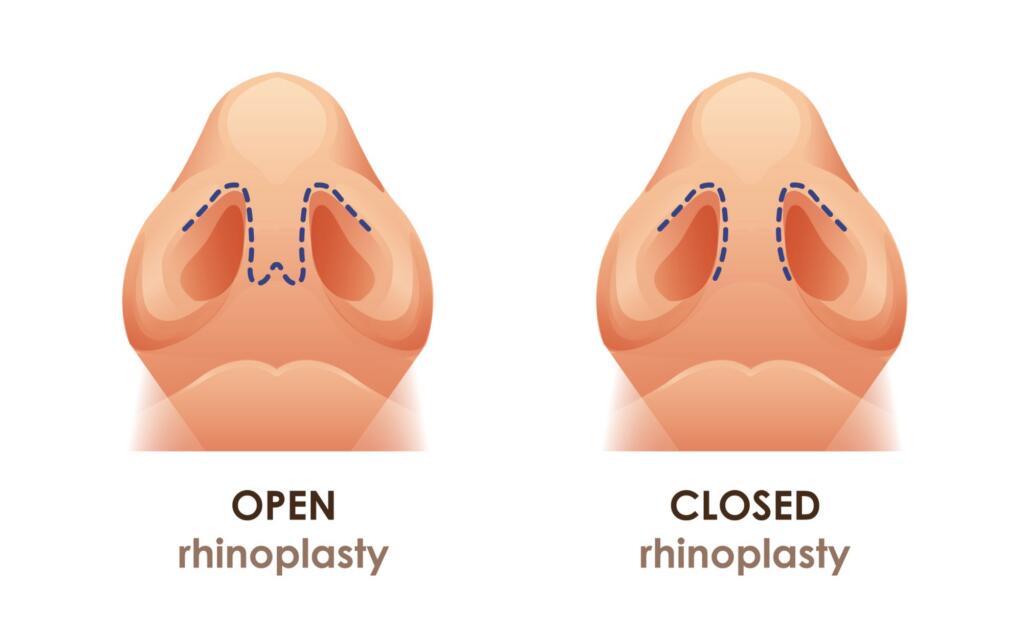
Dr. Ayala selects the appropriate technique based on each patient’s anatomy and goals. There is no universal approach. The three primary methods he uses are open rhinoplasty, closed rhinoplasty, and a hybrid approach using structural and preservation techniques — including ultrasonic rhinoplasty.

Open Rhinoplasty

Open rhinoplasty involves a small incision across the columella (the strip of tissue between the nostrils), giving Dr. Ayala complete access to the nasal structures for maximum visibility and precision. This approach is used for more complex cases: patients who need structural reconstruction, significant tip work or revision of a prior surgery. Recovery takes slightly longer, but the small external incision typically heals well and fades over time.

Hybrid Rhinoplasty

Approach

Structural + Preservation

Tools

Piezo ultrasonic drill

Best for

Natural, durable results

Hybrid rhinoplasty combines traditional structural techniques with modern preservation methods to achieve natural, functional, and durable nasal improvements. It blends the precision of open rhinoplasty (tip work) with the benefits of closed rhinoplasty (dorsal preservation), often using specialized tools like a piezoelectric ultrasonic drill.

Closed Rhinoplasty

Closed rhinoplasty is performed entirely through internal incisions, made inside the nostrils. While this technique results in no external scarring, it is more limited in what it can accomplish, making it better suited for patients with focused concerns, such as reducing a dorsal hump or refining the nasal tip. Closed rhinoplasty generally involves less swelling and a faster recovery.

The Surgery

What Happens During Rhinoplasty Surgery

Rhinoplasty at Ayala ENT & Facial Plastic Surgery in McAllen is performed under general anesthesia at an accredited surgical facility. The procedure typically takes two to four hours, depending on the technique and the complexity of the work involved.

1

Anesthesia & Positioning

Anesthesia is administered by a board‑certified anesthesiologist at an accredited surgical facility. You are monitored continuously throughout the procedure.

2

Incisions

Dr. Ayala makes the appropriate incisions based on the planned approach — either inside the nostrils for a closed rhinoplasty, or inside the nose and across the columella for an open technique.

3

Reshape Cartilage & Bone

Cartilage may be sculpted and repositioned to refine the tip or improve projection. The nasal bridge may be reduced, raised or straightened. If a functional concern is being addressed in the same procedure, that work is completed as part of the surgery.

4

Closure & Splint

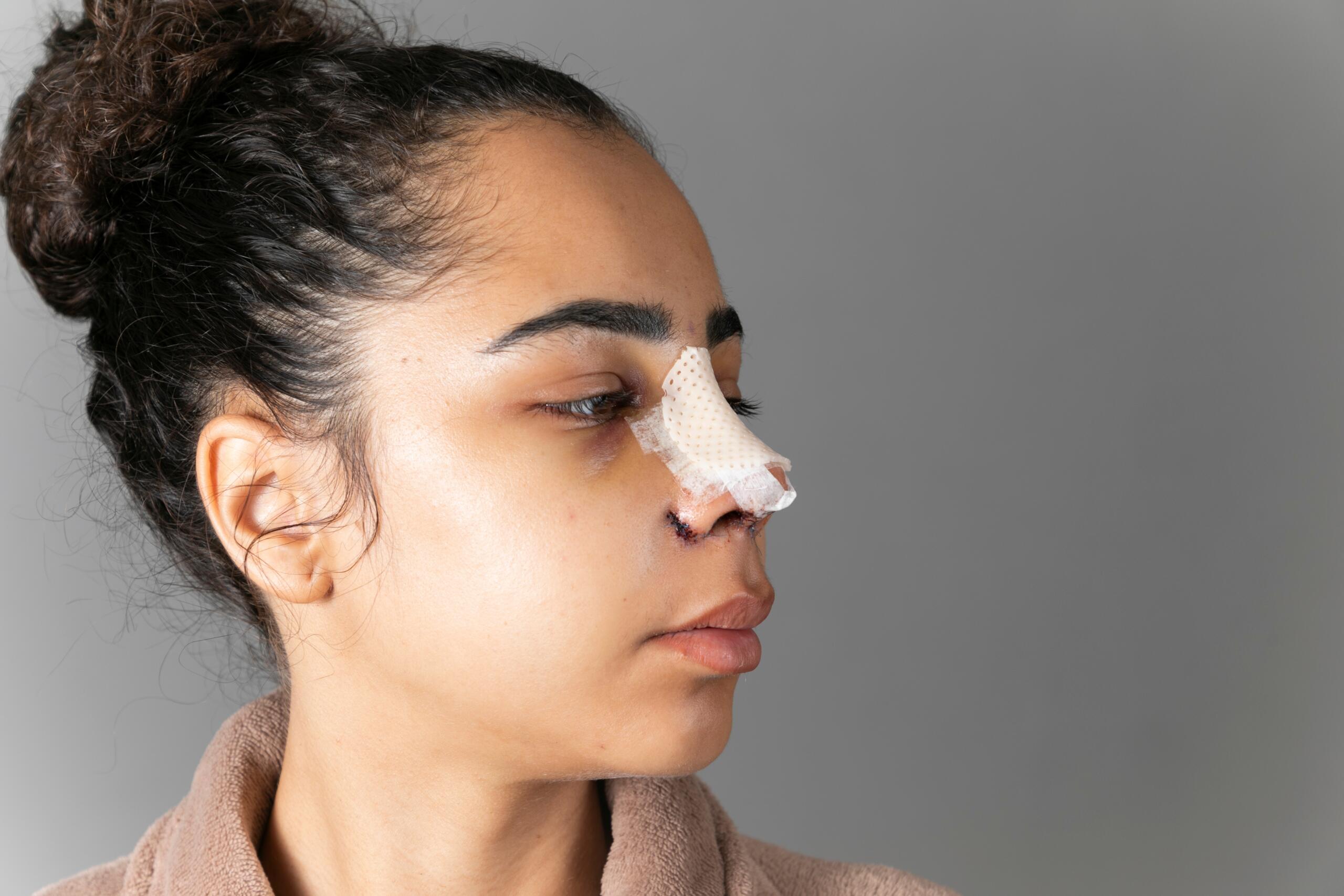
Once the structural adjustments are complete, the incisions are closed and a nasal splint is applied to support the new shape during the recovery process.

Recovery

What Is Rhinoplasty Recovery Like?

Recovery varies by technique used and the complexity of your procedure. If you receive closed rhinoplasty for minor adjustments, you can expect less downtime than a patient needing more extensive structural work to improve both function and appearance.
That said, many patients experience a similar general recovery timeline:

  • Days 1 to 7: A nasal splint is worn for support. Swelling and bruising around the eyes and nose are at their peak. Rest is important during this window.
  • Weeks 1 to 2: The splint is removed at the end of week one. Bruising fades noticeably by week two, and most patients return to desk work and light daily activities.
  • Weeks 3 to 6: The majority of visible swelling has cleared, and the general shape of the nose begins to emerge. Strenuous activity should still be avoided.
  • Months 3 to 6: The nose looks considerably better, though residual swelling continues to resolve. Most people in this range feel comfortable and confident with their results.
  • 9 to 12 months: The healing process is complete and final results are visible.

To ensure optimal healing and results, Dr. Ayala sees all rhinoplasty patients one week, one month, three months, and six months after surgery, with a final check-up at the one-year mark. Because good surgical outcomes depend as much on what happens after surgery as what happens during it, every follow-up appointment is included at no additional cost.

No two noses are the same. Each surgery is planned around that individual person’s anatomy and goals — and with ethnic and cultural preservation in mind.

Dr. Ayala

Revision Rhinoplasty

Revision rhinoplasty is a follow-up procedure performed to correct or improve the results of an earlier nose surgery. The reasons can be cosmetic or functional, and are often both. These are some of the most demanding cases in facial plastic surgery and require the hands of a skillful surgeon who knows how to work on a nose that has already been operated on. Dr. Ayala performs revision rhinoplasty for patients throughout the Rio Grande Valley.

Why Revision Is More Complex Than a First Rhinoplasty

The first rhinoplasty works with natural, undisturbed anatomy. By the time a patient comes in for a second surgery, the nose has healed with scar tissue, and the cartilage and bone may have been reshaped or partially removed during the original procedure. 

Supportive cartilage is often depleted from the first surgery, so revision frequently requires grafting. Dr. Ayala may need to use cartilage from the septum, ear or rib to rebuild structure and restore support. This reconstructive work demands a high level of anatomical knowledge and surgical judgment. 

Reasons for Seeking Revision

Patients come to Dr. Ayala for revision rhinoplasty for many reasons, including: 

  • Cosmetic concerns that remain or appear after healing. This can include a residual hump or a nasal tip that still looks pinched or poorly defined. These are the concerns patients notice most once the swelling has fully resolved.
  • Breathing problems caused by the first surgery. Over-resection or collapse of the nasal structure can leave a patient breathing worse than they did before.
  • Results that never matched the original goals. Sometimes the first surgery simply did not accomplish what the patient was hoping for.
  • A nose that healed unpredictably. Scar tissue and the natural healing process can alter results even after a well-performed procedure.

When to Consider Revision Rhinoplasty

Timing is one of the first things we consider with any revision case. Even when a patient is unhappy soon after their first surgery, Dr. Ayala recommends waiting until the nose has fully healed before moving forward with the revision. This can mean waiting up to twelve months. 

Swelling can linger for the better part of a year after rhinoplasty and hide the final shape of the nose. It can also exaggerate asymmetries. What may look like a problem at three months post-surgery may resolve on its own by twelve. Operating too soon also means working on tissue that is still inflamed and settling, which makes the surgery more difficult and the results less predictable. 

Why Patients Choose Dr. Ayala for Revision Cases

Revision rhinoplasty is a large part of Dr. Ayala’s practice. He is a double board-certified otolaryngologist and facial plastic surgeon who understands the structure of the nose and what a revision case requires. During his service at Bagram Airfield in Afghanistan, Dr. Ayala rebuilt noses for patients with severe facial trauma, and this experience helps him make the right decisions for his patients today. Those who have been disappointed by the results from a previous surgeon can come to Dr. Ayala to restore the look and function of the nose.  

Expertise

The Nose Expert™

There are facial plastic surgeons, and then there are surgeons who can treat the nose, inside and out, with the same trained hands. Dr. Ayala is the latter.

His training began at UCLA School of Medicine, where he graduated with honors. He went on to complete a residency in otolaryngology at Harvard Medical School, then fellowship training in facial plastic and reconstructive surgery at the Lasky Clinic in Beverly Hills. Dr. Ayala is the first double board-certified otolaryngologist and facial plastic surgeon in the Rio Grande Valley.

That combination of credentials matters more for rhinoplasty than for almost any other procedure. The nose affects how you look and how you breathe, and Dr. Ayala understands both sides of that equation. During his service as a facial plastic surgeon at Bagram Airfield in Afghanistan, he performed complex nasal reconstructions on soldiers and civilians with severe facial trauma, an experience that sharpened his surgical judgment in ways a standard cosmetic caseload cannot replicate.

Why Patients Travel to Dr. Ayala

  • 01 First & only in the Valley Double board‑certified ENT + facial plastic surgeon
  • 02 Treats form and function Cosmetic and breathing addressed together
  • 03 Bilingual care Consultations in English or Spanish
  • 04 Ethnic & cultural preservation Individualized planning, no “house style”

Patient Voices

Trusted by Patients Across the Region

Read More Patient Reviews

Worth the trip

"I traveled from San Antonio specifically to see Dr. Ayala. His training, his bedside manner, and his results are simply at a different level. Worth every mile."

Carlos R. — San Antonio, TX

Exceeded all expectations

"Habla español y tiene una paciencia increíble. El Dr. Ayala me explicó todo con claridad y los resultados superaron todas mis expectativas."

Lucía M. — Edinburg, TX

I couldn’t be happier

"Dr. Ayala is an artist. He understood exactly what I wanted — a natural result that improved my breathing and my appearance at the same time. I couldn't be happier."

Maria G. — McAllen, TX

Follow Us

See Why Rhinoplasty Patients Trust Ayala

BEGIN YOUR JOURNEY

World‑class expertise, here in South Texas.

If you’re considering rhinoplasty to refine the appearance of your nose or address breathing issues, Dr. Carlos Ayala offers a thoughtful, personalized approach.

Give us a call

FACIAL PLASTIC SURGERY (956) 688-3223
Name(Required)
Name(Required)
Opt-in

Frequently Asked Questions

Do I need to travel to Houston or San Antonio for rhinoplasty surgery?

No. For years, patients throughout the Rio Grande Valley and South Texas region who wanted rhinoplasty had limited options close to home. Dr. Ayala changed that when he chose to bring his training from Harvard, UCLA and Beverly Hills to McAllen rather than establish his practice in a larger city. As the only double board-certified otolaryngologist and facial plastic surgeon in the Valley, he offers a level of specialized rhinoplasty care that patients previously had to travel hours to find. If something comes up after surgery, he’s here to address your concerns, not a plane ride away.

Is rhinoplasty permanent?

Yes. Rhinoplasty fundamentally alters the structure of the nose. Natural aging may cause minor changes in appearance over decades, but the results of surgery are considered permanent.

What is virtual rhinoplasty?

Virtual rhinoplasty isn’t a procedure itself, but rather a technique we use during the consultation process to help you visualize your results. We use the Vectra H1 Imaging System to capture high-resolution, 3D images that demonstrate your potential results before and after rhinoplasty.

What is revision rhinoplasty?

Revision rhinoplasty may be cosmetic or functional in nature. Dr. Ayala recommends revision rhinoplasty when someone is unhappy with the results of a previous nose job. The nose may have healed improperly or the original surgery may not have addressed all the patient’s needs.

What are the risks of rhinoplasty?

While rhinoplasty is considered safe when performed by an experienced surgeon, it does involve some risks. Potential complications that could arise after surgery may include: Bruising or facial swelling, Infection, Bleeding, Scarring, Asymmetry, Septal perforation, Cerebrospinal fluid (CSF) leak, Reoperation. You can reduce these risks by choosing a skilled, double board-certified facial plastic surgeon like Dr. Ayala, avoiding nicotine and tobacco products (including smoking and vaping) after your surgery, and carefully following all pre- and post-op instructions.

How much does rhinoplasty cost?

The average cost of a rhinoplasty is between $9,000 and $13,000. However, the cost can vary depending on your unique aesthetic goals. Costs are subject to change at any time, but we can discuss details at the time of your consultation. Prior to the appointment, please review our financing options through Prosper® and CareCredit®, as well as an in-office layaway plan.

How does the in-office layaway plan work?

We offer an in-office layaway option to help make your treatment more accessible. Once your customized surgical quote is provided, a minimum deposit of $500 is required to secure your surgery date and time. From there, patients are welcome to make flexible payments directly to our office leading up to their procedure. Please note that the remaining balance must be paid in full at least two weeks prior to surgery. In the event of a cancellation or rescheduling, applicable fees may apply in accordance with office policy.

Request Your Consultation

Name(Required)
Name(Required)
Opt-in
This site is registered on wpml.org as a development site. Switch to a production site key to remove this banner.